Understanding how water softeners work is an important first step when choosing a system for your home. The right softener can help reduce limescale, protect plumbing and appliances, and improve the performance of water-using equipment throughout the property.
This guide brings together practical information on water softener technology, system types, common misconceptions and compatibility considerations. Use the sections below to compare the available options and make a more informed decision.
How Water Softeners Work
Before choosing a system, it helps to understand what a water softener does and how ion exchange removes hardness minerals such as calcium and magnesium from the incoming water supply.
New to Hard Water? Understand the signs, hardness levels and available treatment options. Read the Hard Water Guide →What Is a Water Softener System?
Learn what a water softener is, what it removes and how it differs from filtration and scale-control systems.
Read Article →How a Water Softener Works
Understand the softening process, including resin, brine, regeneration and how softened water is supplied around the home.
Read Article →The Science Behind Ion Exchange
Explore how ion-exchange resin captures calcium and magnesium and why regeneration is essential for continued performance.
Read Article →Types of Water Softeners and System Comparisons
Water softeners, conditioners, filters and reverse osmosis systems all solve different water problems. Comparing them carefully helps ensure that the selected system matches your water supply and household requirements.
Water Softener vs Whole House Filtration
Compare hardness removal with whole-house filtration and understand when both systems may be beneficial.
Read Article →Water Softener vs Reverse Osmosis
Learn how softening and reverse osmosis address different water-quality concerns and how they can work together.
Read Article →Water Softener vs Water Conditioner
Understand the difference between removing hardness minerals and altering how scale behaves within the plumbing system.
Read Article →Electric vs Non-Electric Water Softeners
Compare regeneration controls, installation requirements, reliability and suitability for different households.
Read Article →Water Softener vs Water Filter
Discover why softening and filtration are not interchangeable and which water issues each technology is designed to address.
Read Article →Common Water Softener Myths and Misconceptions
Water softeners are often surrounded by conflicting claims about performance, safety and alternative technologies. These guides separate practical evidence from common misunderstandings.
Common Water Softener Myths Debunked
Review some of the most frequent misconceptions about softened water, salt use, maintenance and system performance.
Read Article →Are Magnetic Water Softeners Any Good?
Understand what magnetic scale devices claim to do and how they differ from true ion-exchange water softeners.
Read Article →Can Water Be Too Soft?
Learn what very low hardness means in practice and whether a domestic water softener can make water excessively soft.
Read Article →Compatibility and Installation Considerations
Correct installation and compatibility are essential for reliable operation. This includes understanding how softened water interacts with boilers, central heating systems and reverse osmosis equipment.
Using RO with a Water Softener
Learn why a water softener can support an under-sink RO system and how the two technologies can be installed together.
Read Article →Softened Water and Central Heating
Understand the considerations around filling and maintaining domestic heating systems with softened water.
Read Article →Water Softeners and Combi Boilers
Explore whether softened water can be used with a combi boiler and what manufacturer guidance should be checked.
Read Article →Choosing the Right Water Softener
The best water softener is not necessarily the largest or most expensive. It should be matched to your household, water hardness, peak demand and preferred installation location.
Water Softener Selection Checklist
- Water hardness: confirm the hardness level for your property before selecting the resin capacity.
- Household size: consider the number of occupants and typical daily water use.
- Bathrooms: allow for simultaneous use and peak flow requirements.
- Regeneration type: compare metered, timed, electric and non-electric operation.
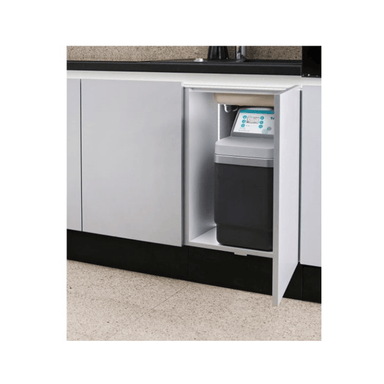
- Installation space: measure the available cupboard, utility room, garage or outdoor cabinet.
- Drain and power access: check what the chosen system requires before installation.
- Salt storage: consider refill access and the amount of salt you are comfortable storing.
- Future maintenance: ensure there is enough room for servicing and routine salt top-ups.
Need Help Choosing the Right Water Softener?
Regal Flow offers impartial guidance on water softener sizing, system type and installation requirements. We do not provide installation directly, but we maintain a UK installer network and can help introduce you to a suitable professional where available.