A practical UK household guide
Understand What Hard Water Is Doing to Your Home
Hard water contains naturally dissolved calcium and magnesium. It is not usually a safety problem, but it can leave limescale, reduce soap lather and place extra demands on hot-water appliances.
This guide helps you recognise the signs, understand your water-hardness reading and choose between a water softener, scale-control system or drinking-water filter.
The simple explanation
What Is Hard Water?
Water becomes hard as it passes through mineral-rich rock and dissolves small amounts of calcium and magnesium. The level varies by local geology and water source, which is why neighbouring regions can have noticeably different water.
Hardness is normally reported as milligrams per litre of calcium carbonate, written as mg/L CaCO₃. A higher number means more hardness minerals are present and a greater likelihood of visible scale when the water is heated or evaporates.
The Drinking Water Inspectorate does not set a health-based legal limit for hardness. For most households, the concern is practical: scale in kettles and hot-water equipment, marks around fittings and reduced lather from soap and detergent.

Reading the result
How Hard Is Your Water?
The Drinking Water Inspectorate uses the following broad classifications. Your water supplier’s postcode report is the best starting point because hardness can vary locally.
Classification source: Drinking Water Inspectorate. For an exact local figure, check the water-quality information published by your supplier.
Evidence around the home
Six Common Signs of Hard Water
One sign alone does not prove your hardness level, but several appearing together usually justify checking your supplier’s report.
Scale around taps
White or chalky deposits repeatedly form around tap bases, spouts and shower fittings.
Marked shower glass
Mineral spots return quickly after cleaning, particularly where droplets are left to dry.
Kettle deposits
A rough pale coating develops on the element or base where water is regularly heated.
Reduced soap lather
More soap, shampoo or detergent is needed to achieve the lather you expect.
Residue after washing
Soap scum or a dull film appears on sinks, baths, tiles, crockery or glassware.
Scale-sensitive appliances
Coffee machines, irons and other heated appliances need more frequent descaling.
Why it becomes noticeable
What Hard Water Can Affect
Hardness minerals become most visible when water is heated or evaporates. Deposits can accumulate on heating elements and inside hot-water equipment, while soap reacts less readily and can leave residue behind.
That does not mean every appliance problem is caused by hard water. Flow, temperature, maintenance and product design also matter. The sensible approach is to confirm the hardness reading before choosing treatment.
Match the treatment to the problem
Which Hard-Water Solution Do You Need?
A product should be judged by what it actually changes. A water softener, water conditioner and drinking-water filter do different jobs.
For genuinely softened water
Water Softener
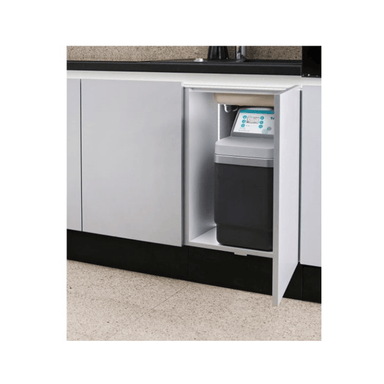
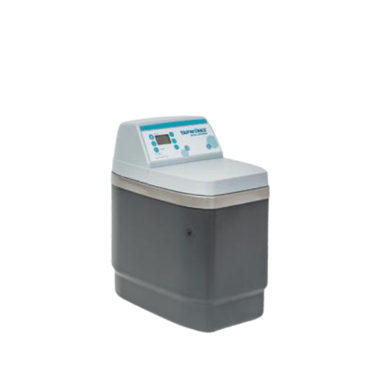
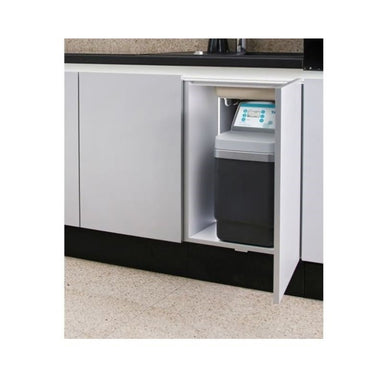
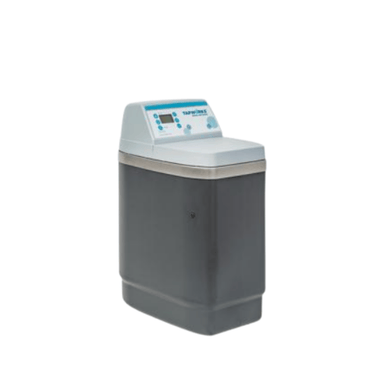
An ion-exchange softener removes calcium and magnesium and replaces them with sodium ions. This is the clearest whole-home option when the aim is softened water and strong limescale prevention.
- Changes the hardness of the water
- Usually requires salt, drainage and servicing access
- Must be correctly sized for hardness and demand
For salt-free scale control
Water Conditioner
A conditioner aims to change how hardness minerals behave or deposit. It may help manage scale, but it does not normally remove calcium and magnesium or create softened water.
- Hardness minerals generally remain present
- Useful where salt-free treatment is preferred
- Performance claims should be checked carefully
For drinking-water quality
Drinking-Water Filter
Carbon filters and reverse-osmosis systems are primarily selected for drinking-water treatment. A standard carbon filter is not a whole-home hardness solution.
- Targets drinking water at a specific tap
- RO can reduce dissolved minerals at point of use
- Does not replace whole-home scale planning
Keep an Unsoftened Drinking-Water Supply
The Drinking Water Inspectorate advises retaining an unsoftened supply to the kitchen tap for drinking and cooking when a domestic ion-exchange softener is fitted. The NHS also states that artificially softened water should not be used to prepare infant formula.
Continue with the right guide
Your Next Step
Straightforward answers
Hard Water FAQs
Is hard water safe to drink?
Water hardness is not subject to a health-based limit in UK drinking-water regulations. If you have a concern about your supply, check the quality report from your water company rather than judging it from hardness alone.
Does boiling remove hard water?
Boiling can precipitate some temporary hardness, which is why scale appears in kettles. It does not provide a practical whole-home solution and permanent hardness remains.
How can I check my water hardness?
Start with the postcode-based water-quality information published by your water supplier. A test kit can provide a property-level reading where more precise sizing is required.
Will a normal water filter remove hardness?
A standard activated-carbon filter is not designed to soften the whole-home supply. Check the exact reduction claims of any filter rather than assuming all filtration removes calcium and magnesium.
Is limescale the same as hard water?
Hard water describes water containing dissolved hardness minerals. Limescale is the solid deposit those minerals can form when water is heated or evaporates.
Do I need a softener or a conditioner?
Choose a softener when you want hardness minerals removed and genuinely softened water. Consider a conditioner when salt-free scale control is the priority and you accept that the hardness minerals generally remain.
Friendly expert support
Not Sure What Your Hard-Water Reading Means?
Send us your postcode, hardness figure, household size and the problem you want to solve. We will help you narrow the suitable options before you order.
View Water Softeners