Skip to content
A family with soft towels after using a water softener

Water Softeners

Water Softeners for Home – Say Goodbye to Limescale Forever

Tired of battling limescale and hard water damage? Our range of water softeners brings silky-smooth water back into your life — protecting appliances, saving you time on cleaning, and leaving your skin feeling noticeably softer.

Water Softener: The Complete UK Homeowner's Guide for 2026

If you live in a hard water area, you already know the frustration. That stubborn white crust on your kettle, the cloudy film on your shower screen, and the constant battle to keep your bathroom taps looking presentable. These are all signs that calcium and magnesium—the hardness minerals dissolved in your mains supply—are leaving their mark on your home.

A water softener is a device designed to remove these minerals before they reach your taps, boilers, and appliances. For households across the South East, East Anglia, and parts of the Midlands, where water hardness levels are among the highest in the UK, installing a softener can transform daily life. Regal Flow provides guidance for choosing, sizing, and caring for domestic water softeners, helping you make informed decisions without the pressure of competing brand promotions.

Effect Hard Water Soft Water Limescale on surfaces Heavy buildup Minimal to none Soap and detergent use More required Less required Skin and hair feel Dry, sometimes itchy Smoother, less residue Appliance efficiency Reduced over time Maintained Cleaning effort Higher Lower.

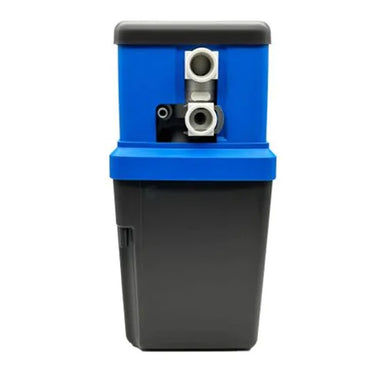
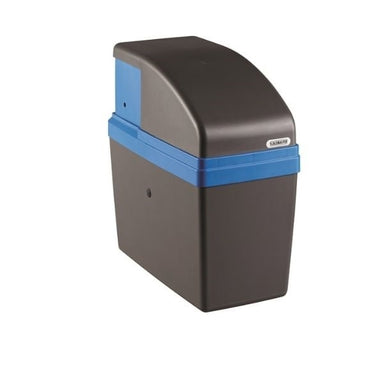
Two Home Water Softeners with a regal flow logo

What Does a Water Softener Do?

At its core, a water softener removes hardness minerals from your incoming mains water supply and delivers soft water to your home. This simple function has far-reaching effects on everything from your morning shower to the lifespan of your combi boiler.

The benefits extend across your entire household:

  • Reduced limescale on kettles, showerheads, taps, and glass surfaces
  • Extended life for boilers, hot water cylinders, and heating elements
  • Improved efficiency of combi boilers, electric showers, and heat exchangers
  • Less spotting on glassware, tiles, and stainless steel
  • Lower detergent and soap usage for washing machines and dishwashers
  • Softer skin and hair after bathing

Over months and years, softened water gradually descales existing pipework, cylinders, and appliances without aggressive chemical intervention. Scale deposits dissolve slowly as fresh water passes through, restoring flow rates and heat transfer efficiency. This is particularly valuable for modern condensing boilers and heat pumps, where even thin scale layers on heat exchangers can affect performance and energy consumption.

Most softened water is perfectly safe for domestic use, including bathing, cooking, and cleaning. However, some households choose to retain a separate unsoftened tap—often at the kitchen sink—for drinking water, either due to local regulations, taste preference, or to provide water for plants and pets.

How a Water Softener Works (Ion Exchange Explained)

The vast majority of domestic water softeners in 2026 use ion exchange technology. This process has been refined over decades and remains the most effective method for removing calcium and magnesium from household water.

Here's how it works in plain language:

  • Hard water enters the softener unit from your mains supply
  • Water passes through a tank filled with tiny resin beads, each measuring roughly 1–2 millimetres in diameter
  • These resin beads are manufactured from polystyrene and carry a negative electrical charge
  • The beads are coated with positively charged sodium ions (or potassium ions in some systems)
  • As hard water flows through, calcium and magnesium ions—which also carry a positive charge, but stronger than sodium—are attracted to the resin
  • The hardness minerals attach to the resin, displacing the sodium ions into the water
  • Soft water exits the unit and flows to your taps, appliances, and heating system

The resin has a finite capacity. Once the beads become saturated with calcium and magnesium, they can no longer soften incoming water effectively. This is where regeneration comes in.

During regeneration, the softener flushes a concentrated brine solution (made from softener salt dissolved in water) through the resin tank. The high concentration of sodium ions in the brine overwhelms the calcium and magnesium attached to the resin, forcing them off the beads and down the drain. The resin is then recharged with fresh sodium ions and ready to soften more water.

Most modern softeners regenerate automatically, typically in the early hours of the morning when water demand is lowest.

Key technical terms:

  • Resin: The ion exchange medium that captures hardness minerals
  • Brine: A concentrated salt solution used to regenerate the resin
  • Regeneration: The process of flushing hardness minerals and recharging the resin
  • Capacity: The volume of water a softener can treat between regenerations

Alternative conditioning methods exist, including template assisted crystallisation (TAC), electromagnetic conditioners, and reverse osmosis systems. However, these work differently from true ion exchange. TAC and electronic systems don't actually remove minerals—they aim to change their structure to reduce scaling. Reverse osmosis removes minerals along with other impurities but is typically used for drinking water only due to slower flow rates. For whole-house soft water, ion exchange remains the standard.

A shower with soft water coming out
A hand with soft water pouring from a tap

Testing Whether Your Water is Soft

Once your softener is installed, it's worth confirming that the system is working correctly. Regular testing helps you monitor performance, optimise salt usage, and ensure your appliances are fully protected.

The Classic Soap Test

This simple method gives you a quick visual indication of water hardness:

  • Fill two identical clear glass bowls with equal amounts of water—one from a softened tap, one from an unsoftened source (such as an outside tap or a retained hard water line)
  • Add the same small amount of pure liquid soap to each bowl—a few drops of castile soap or similar works well
  • Stir or swish both bowls vigorously for 10–15 seconds
  • Observe the results

Soft water will produce immediate, fluffy bubbles that persist on the surface. Hard water typically creates little lather and may show a cloudy, scummy appear

Using Test Strips or Kits

For a more precise measurement, affordable hardness test strips or drop-count test kits are available from hardware stores and online suppliers. These give readings in parts per million (ppm) or degrees of hardness (°dH).

As a general guide, water below 60 ppm (as calcium carbonate equivalent) is considered soft. If your softener is working correctly, treated water should register in this range or lower.

Where to Test

Check water at several points around your home:

  • Kitchen cold tap (if fed by the softener)
  • Bathroom basin
  • Outside tap (often left unsoftened)
  • Any dedicated drinking water line

Keep a simple log of your test results with dates. Over time, this record helps you spot any changes in performance.

Signs of truly soft water:

  • Immediate soap lather without scum
  • Hardness readings below 60 ppm
  • That characteristic slippery feeling when washing hands

Clean rinse without residue on skin

Choosing and Sizing a Water Softener

Getting the size right is critical. An undersized softener regenerates too frequently, wasting salt and water while potentially running out of capacity during peak demand. An oversized unit costs more upfront and may not regenerate often enough to stay fresh.

Capacity is typically stated as litres of softened water the unit can produce between regenerations, based on a specific hardness level. For example, a softener might be rated for 3,000 litres at 300 ppm hardness. If your local water is harder, the effective capacity drops; if softer, it increases.

Sizing by Household

UK households use roughly 130–150 litres of water per person per day. Use this as your baseline:

Household Size Daily Water Use (approx.) Recommended Capacity Range 1-2
1-2 people 260-300 litres Compact to medium units
3-4 people 450-600 litres Medium to standard units
5+ people 700+ litres Standard to high-capacity

Example Calculation

A 4-person home in a 300 ppm area using 550 litres daily would need a softener capable of treating at least 3,850 litres per week (550 x 7). A unit rated at 4,000–5,000 litres between regenerations at 300 ppm would be suitable.

Regeneration Types

  • Metered (demand-initiated): Regenerates only when needed — more efficient
  • Timer-controlled: Regenerates on a fixed schedule — simpler, but can waste salt/water

Physical Considerations

Before purchasing, check:

  • Available space (under-sink, utility room, garage)
  • Access to a drain for regeneration discharge
  • Power supply (many electric models need a socket nearby)
  • Clearance for adding salt blocks or tablets

Check your local water hardness using your water company's postcode checker.

Core sizing factors:

  • Number of people in the household
  • Local water hardness in ppm
  • Peak flow rate requirements
  • Regeneration type (metered vs timer)

Physical space and installation constraints

A vector of a van

Fast, Free Shipping

Quick Dispatch, No Hidden Fees

shield with a tick in for manufacturers warranty

Manufacturer's Warranty

Peace of Mind Included with up to 5 Years Warranty

a face with hands open

Ongoing Customer Support

Advice Before and After Sale

a hand with a spanner in showing installation support

Installation Support

Need help installing? We’ve got you covered.

Types of Water Softener

When comparing different types of water softener, you're typically looking at regeneration systems, cylinder arrangements, and salt formats.

Single-Cylinder vs Twin-Cylinder Systems

  • Single-cylinder: Most common; may bypass to hard water during regeneration (usually overnight)
  • Twin-cylinder: Continuous soft water, even during regeneration — ideal for busy homes

Non-Electric vs Electric Systems

  • Non-electric: Mechanical meter triggers regeneration; no power needed
  • Electric metered: More programming options; sometimes smart features

Salt Formats

  • Block salt: Clean and easy to handle; common in compact under-sink units
  • Tablet salt: Widely available; dissolves evenly
  • Granular salt: Often used in larger or commercial systems

Quick comparison:

  • Twin-cylinder = No soft water downtime
  • Block salt = Easier handling, cleaner storage
  • Electric = More programming flexibility
  • Non-electric = No power required, fewer components

Obtaining and Using Salt for Your Water Softener

High-purity salt is essential for reliable regeneration and long-term softener health. Using the wrong type can introduce impurities that clog valves, coat resin, and ultimately damage your system.

Only use salt specifically labelled for water softeners. In the UK, this typically means Grade A vacuum-evaporated salt in block, tablet, or granular form. Never use sea salt, rock salt intended for de-icing roads, or cooking salt.

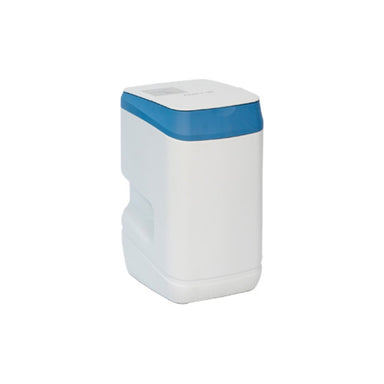
An ecosoft water softener

Ecosoft Water Softener

  • Compact design: Fits in standard under-sink cabinets; needs only 469mm height
  • World-renowned manufacturer: Trusted globally, active in over 60 countries
  • Flexible: An excellent option for apartments, renters, and other compact spaces
  • Straightforward installation: Full kit provided for effortless setup.
A tapworks water softener

Tapworks NSC09PRO

  • World-leading: Tapworks manufactures 25% of all water softeners globally
  • Intelligent Controller: Monitors total regenerations and ensures optimal functionality of turbine and switches
  • Warp-resistant salt cabinet: Salt cabinet resistant to warping, a common theme for lesser quality softeners
  • Simple installation: Full kit provided for effortless setup.
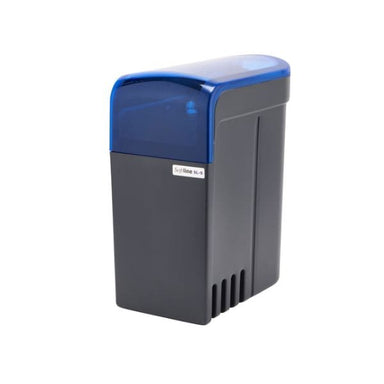
A scalemaster softline 150 water softener

Scalemaster Softline SL-150

  • High Flow Rates: Keeps water flowing easily to ensure your home always has a good flow of softened water
  • Low Salt and Water Usage: Save water, lower bills, and reduce the frequency of refills
  • No Electricity Needed: Easy setup, no power connections or sockets required
  • Long Warranty: 5 Years Parts, 2 Years Labour

How Often to Add Salt

Salt usage depends on your household size, water hardness, and consumption patterns. As a rough guide, a 4-person home in a moderately hard area might add block salt every 3–4 weeks.

Check your salt level regularly. Salt should sit above the water level in the brine well. If you can see water pooling above the salt, or if the salt has formed a solid bridge across the tank, action is needed.

Storage Tips

Store salt bags or blocks in a dry location off the floor. Moisture causes clumping and can degrade packaging.

Before you buy softener salt:

  • Confirm purity (Grade A or equivalent)
  • Match format to your softener (block, tablet, or granular)
  • Check compatibility with your specific make and model
  • Buy from reputable merchants with clear specification sheets
  • Avoid anonymous or unbranded products
A wrekin water softener

Wrekin Water Softener 15 Litre

  • Digital Interface: User-friendly control panel allows precise adjustments and monitoring
  • Auto Adapt: Automatically adjusts to fluctuations, maintaining steady water flow
  • Smart Optimisation: Efficiently uses salt and water, regenerating only when required
  • Salt Cabinet: Hassle free access and easy refill
A Tapworks NSC11pro water softener

Tapworks NSC11PRO

  • World-leading: Tapworks manufactures 25% of all water softeners globally
  • Intelligent Controller: Monitors total regenerations and ensures optimal functionality of turbine and switches.
  • Warp-resistant salt cabinet: Salt cabinet resistant to warping, a common theme for lesser quality softeners
  • Simple installation: Full kit provided for effortless setup.
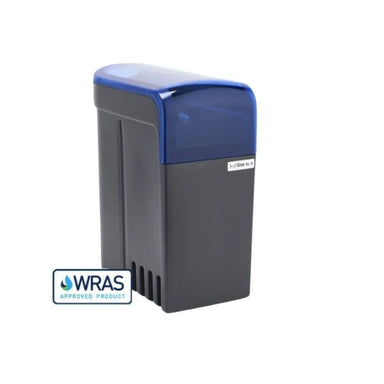
A scalemaster water softener

Scalemaster Softline SL-S

  • High Flow Rates: Keeps water flowing easily to ensure your home always has a good flow of softened water
  • Low Salt and Water Usage: Save water, lower bills, and reduce the frequency of refills
  • No Electricity Needed: Easy setup, no power connections or extra sockets required.
  • Long Warranty: 5 Years Parts, 2 Years Labour
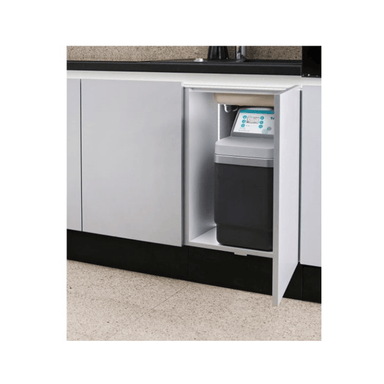
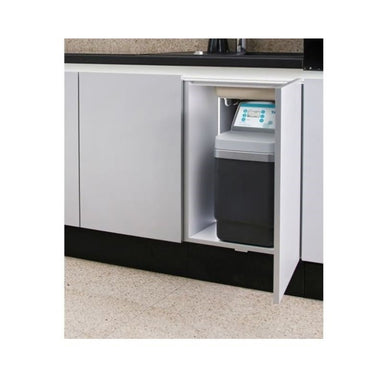
  • Ecosoft water softener installed and connected underneath a sink
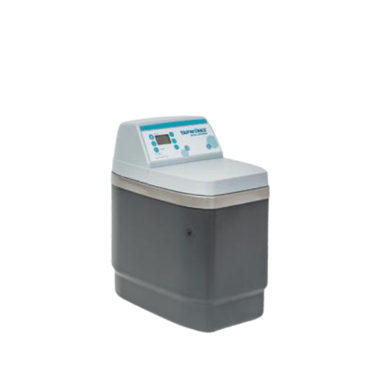
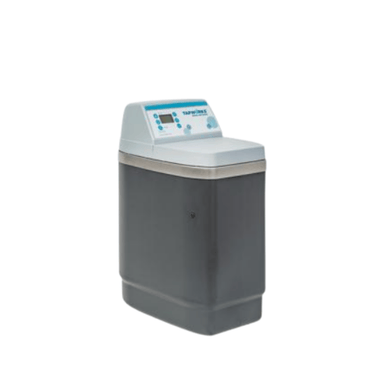
    a black ecosoft water softener
    Ecosoft Ecosoft Water Softener 10L
    from £755.00

    End Limescale Problems Today with the Compact Ecosoft Water Softener This Ecosoft Water Softener is Compact, Easy to Install, and Fits Under M...

    View full details
    from £755.00