Reverse osmosis is widely known for improving drinking water quality, but its capabilities extend far beyond basic filtration. It is also used in specialist environments where water purity, consistency and system performance directly affect the final result.
This guide brings together advanced reverse osmosis topics, specialised applications, treatment combinations, technical considerations and common performance issues. It explains where reverse osmosis performs particularly well and where additional treatment may be required.
Specialised Reverse Osmosis Applications
Beyond everyday drinking water, reverse osmosis is used in environments where mineral content, chemical composition or water consistency must be carefully controlled. Each application places different demands on filtration stages, output, storage and maintenance.
Reverse Osmosis Water Filters for Aquariums
Learn how reverse osmosis can provide controlled base water for sensitive freshwater and marine environments.
Read Article →Reverse Osmosis Countertop Systems
Explore the capabilities, limitations and ideal applications of countertop reverse osmosis dispensers.
Read Article →Tankless Reverse Osmosis Systems
Understand how tankless systems deliver higher flow rates, reduced storage requirements and direct purified water.
Read Article →Advanced Contaminants and Emerging Risks
Modern water supplies may contain complex contaminants including PFAS, microplastics, nitrates, bacteria, dissolved metals and pharmaceutical residues. Reverse osmosis can reduce many of these substances, but performance depends on membrane quality, water pressure, contaminant concentration and supporting filtration.
Can Reverse Osmosis Remove Bacteria?
Understand how RO membranes respond to bacterial contamination and why system hygiene remains important.
Read Article →What Does Reverse Osmosis Not Remove?
Explore the limitations of reverse osmosis and when additional treatment stages may be required.
Read Article →Reverse Osmosis System Water Quality
Learn how reverse osmosis affects purity, taste, mineral content and TDS readings.
Read Article →Combining Reverse Osmosis with Other Treatments
Reverse osmosis often performs best as part of a wider treatment process. Carbon filtration, sediment filtration, UV sterilisation, remineralisation and water softening each address different water quality or system protection requirements.
Carbon Filtration and Reverse Osmosis
Carbon filtration helps reduce chlorine, taste and odour while protecting many RO membranes from chemical damage.
UV Sterilisation and Reverse Osmosis
UV treatment can provide an additional microbiological barrier where bacterial contamination is a known risk.
Water Softening Before Reverse Osmosis
A water softener can reduce scale forming minerals before they reach the membrane in hard water areas.
Remineralisation After Reverse Osmosis
A remineralisation stage can improve taste and raise pH after the main purification process.
Reverse Osmosis Performance and Efficiency
Water pressure, membrane capacity, reject water ratio, flow rate, electricity use and maintenance frequency all affect real world performance. A high capacity system may still underperform if the incoming pressure is poor or filters are not replaced on time.
Reverse Osmosis Power Consumption
Understand electricity usage, booster pump operation and the running costs of powered RO systems.
Read Article →Reverse Osmosis Reject Water
Learn why reject water occurs and how pressure, membrane design and maintenance affect system efficiency.
Read Article →When to Change Reverse Osmosis Filters
Identify replacement schedules, warning signs and the risks of delaying essential filter changes.
Read Article →Reverse Osmosis Tank Lifespan
Understand expected tank life, pressure loss, common failures and when replacement is required.
Read Article →RO Installation, Connections and Troubleshooting
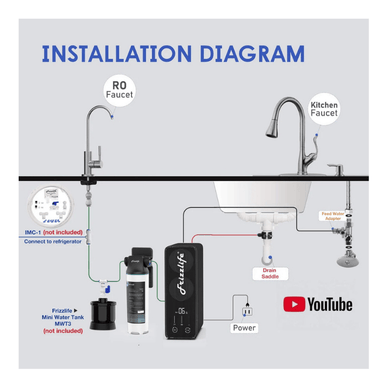
Correct installation has a major effect on system reliability. Tubing routes, fittings, water pressure, trapped air and pressure shock can all influence noise, flow and long term performance.
Reverse Osmosis System Connections
Understand tubing, fittings and correct connection layouts for a reliable RO installation.
Read Article →Reverse Osmosis Water Lines
Learn how to choose, route and maintain the water line connected to a reverse osmosis system.
Read Article →Fixing Low Water Pressure
Identify the causes of poor output and practical ways to improve pressure and system performance.
Read Article →Removing Air from an RO System
Resolve noise, sputtering and inconsistent flow caused by trapped air inside the system.
Read Article →Reverse Osmosis Water Hammer
Learn how to identify pressure shock and reduce noise or damage to system components.
Read Article →Choosing an Advanced Reverse Osmosis Setup
A well specified system should match the incoming water, intended use, daily demand and available installation space. The checklist below highlights the main points to review before choosing an advanced reverse osmosis setup.
Advanced RO Planning Checklist
- Water analysis: confirm hardness, TDS, chlorine, iron and any specific contaminants of concern.
- Required output: calculate daily use, peak demand and preferred flow rate.
- Water pressure: confirm whether the incoming pressure is suitable or a booster pump is needed.
- Pre treatment: assess whether softening, carbon filtration or sediment filtration is required.
- Post treatment: decide whether UV, remineralisation or additional polishing is needed.
- Storage: confirm whether a pressurised tank or direct flow system best suits the application.
- Maintenance access: allow enough space for filter, membrane and component replacement.
- Running costs: include replacement filters, membranes, electricity and reject water.
Need Help Choosing a Reverse Osmosis System?
Regal Flow can help you compare reverse osmosis systems, understand water quality requirements and identify the most suitable treatment setup for your home or specialist application.