


Carbon and Sediment Filters
A practical choice when your main priorities are chlorine taste, odour and visible sediment. They normally retain the dissolved minerals already present in the water and do not usually reduce total dissolved solids.

Under-sink filtration buying guide
There is no single best under-sink water filter for every UK home. The right choice depends on what you want to reduce, how much space you have beneath the sink and whether you want straightforward carbon filtration or the broader reduction performance of reverse osmosis.
Start with your water concern rather than the number of filtration stages. A well-matched system will give you better results and make replacement filters, running costs and maintenance easier to manage.
A practical choice when your main priorities are chlorine taste, odour and visible sediment. They normally retain the dissolved minerals already present in the water and do not usually reduce total dissolved solids.
These use a fine membrane alongside pre- and post-filtration. They can provide more comprehensive particle and microorganism reduction than a basic carbon cartridge while generally retaining dissolved minerals.
RO systems are designed to reduce a broad range of dissolved substances as well as chlorine, sediment and other contaminants. Exact performance varies, so check the individual model specification and certification.
Most carbon and ultrafiltration systems do not remove the dissolved calcium and magnesium that cause limescale. Reverse osmosis substantially reduces these minerals in the treated drinking-water line, but it does not soften water throughout the property. For whole-home limescale treatment, compare our water softeners.

Standard filtration
Choose carbon or ultrafiltration when you want better-tasting water, straightforward cartridge changes and no wastewater connection. These systems are often compact and may operate without electricity.
Reverse osmosis
Choose RO when reducing dissolved substances and scale-forming minerals in your drinking water is a priority. Account for the drain connection, filter schedule and any electrical requirement.
Compare Reverse Osmosis SystemsA good system should fit the cupboard properly, deliver enough water for your household and have replacement filters you can obtain without difficulty. Before ordering, check the connection sizes, tap arrangement, incoming pressure, power requirement and whether a waste connection is needed.
If you are comparing under-sink filtration with treatment for the whole property, read our whole-house vs under-sink filter guide.
Tell us what you want to improve, your cupboard dimensions and whether you prefer a standard filter or reverse osmosis. We will help you narrow down the suitable options.
The best system is the one matched to your water concern, available cupboard space, required flow rate and maintenance budget. Compare verified reduction claims rather than choosing solely by the number of filtration stages.
Standard carbon and ultrafiltration systems generally do not remove the dissolved minerals that cause limescale. Reverse osmosis reduces these minerals in the treated drinking-water line, while a water softener treats hardness throughout the home.
Some systems are designed and tested to reduce particular PFAS compounds, but this should never be assumed. Check the manufacturer’s stated performance and certification for the exact model.
No. RO offers broader reduction of dissolved substances, but a standard filter may be more appropriate when the main concern is chlorine taste or sediment and you want a simpler system without a drain connection.
Many systems use a separate drinking-water tap. A compatible three-way tap can also be used when it has an isolated filtered-water channel and the connections match the filtration system.
Replacement intervals vary by model, water quality and household use. Follow the manufacturer’s schedule and check the ongoing cartridge costs before choosing a system.
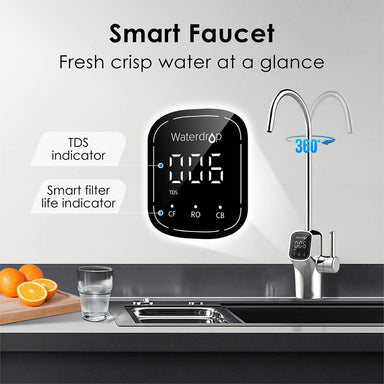
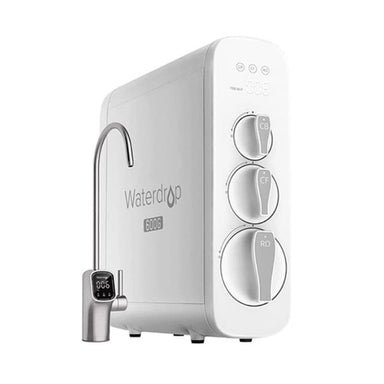
Waterdrop® Under Sink Reverse Osmosis Waterdrop G3P600 Tankless Reverse Osmosis System Fast 600 GPD reverse osmosis filtration with a smart TDS f...
View full details

Aquaphor RO-101S Compact Reverse Osmosis for High-Quality Drinking Water A compact under-sink reverse osmosis syste...
View full details

Why Choose the Waterdrop K6 RO System? Experience the pinnacle of water purification with the Waterdrop K6 Under-Sink Reverse Osmosis Filter Sy...
View full details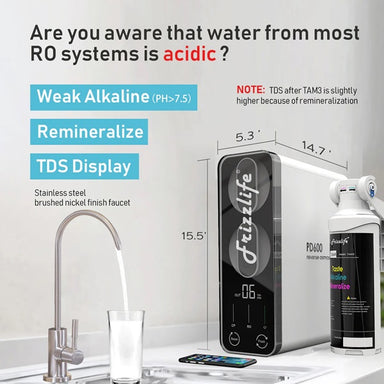
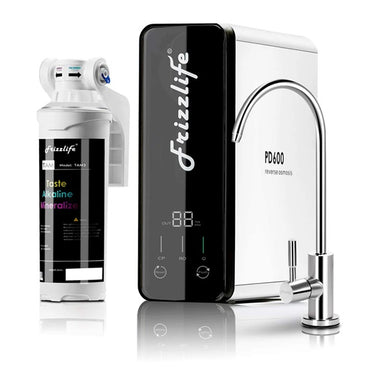
Why Choose a Frizzlife RO System? Incredible 8 Layers of Filtration Water Remineralisation Alkaline Water over 7.5 pH Tank-Free ...
View full details

Waterdrop X8 800 GPD Tankless Reverse Osmosis with Smart Monitoring A compact under-sink reverse osmosis system with 9-stage filtr...
View full details

Waterdrop X12 1200 GPD Tankless Reverse Osmosis with Smart Monitoring A high-flow under-sink RO system combining 11-stage filtrati...
View full details

Hommix hydRO Pro 800GPD High-Flow Tankless Reverse Osmosis for Modern Kitchens A compact 800GPD under-sink reverse osmos...
View full details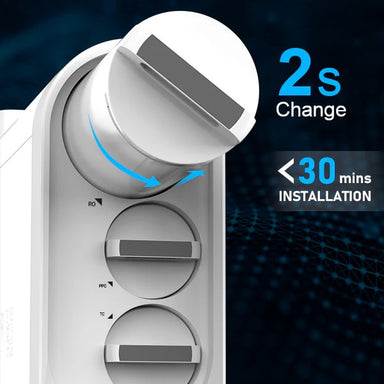
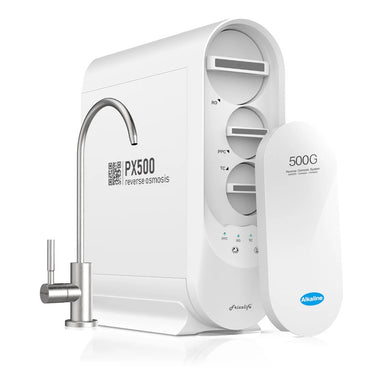
Why Choose the Frizzlife PX500? Discover Its Advanced Filtration, Alkaline Water Benefits, and Tankless Design Incredible 8 Layers of Filtrat...
View full details

Aquaphor RO-202S EU Smart Reverse Osmosis with Integrated Storage and Remineralisation A compact under-sink reverse osmosis system combini...
View full details

Waterdrop X16 1600 GPD Tankless Reverse Osmosis for High-Demand Kitchens A high-capacity under-sink RO system with 11-s...
View full details

Upgrade Your Water Supply with this Global Product from Ecowater Crystal-Clear Water 🌍Save money in the long term without depending on bottle...
View full details

Compact Tankless Reverse Osmosis System Tankless Reverse Osmosis System for Pure, Balanced Drinking Water The Ecosoft CROSS 60 is a powerful ...
View full details

Compact Tankless Reverse Osmosis System Tankless Under-Sink Reverse Osmosis System for Compact Kitchens The Ecosoft CROSS Solo is a compact, ...
View full details

Direct Flow Reverse Osmosis System with Built-In Remineralisation Tankless Reverse Osmosis System for Pure, Balanced Drinking Water Enjoy fas...
View full details

Compact Reverse Osmosis Filtration Spectrum Z1 Under Sink Reverse Osmosis System The Spectrum Z1 is a compact, powered under-sink ...
View full details
Kinetico Ruwa 600 GPD Compact, Tankless Reverse Osmosis for Modern Kitchens The Kinetico Ruwa is a direct-flow under-sink reverse osmosis ...
View full details