Skip to content

Mains Water Filtration Systems

Mains Water Filtration Systems for Cleaner Water Throughout the Home

Mains water filtration systems are designed to treat water as it enters your property, helping to improve overall water quality before it reaches your taps, showers, and appliances. For households dealing with chlorine taste, sediment, general water quality concerns, or hard water related issues, this type of setup offers a broader solution than a single point of use filter.

If your goal is to improve water across the entire property rather than at just one tap, a whole house system is usually the right direction. This page explains how mains filtration works, how it differs from drinking water filters, and when it makes sense to move to a dedicated whole house setup.

What Is a Mains Water Filtration System?

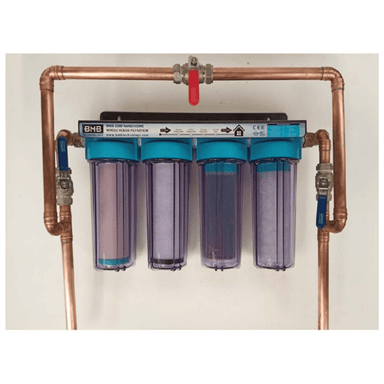
A mains water filtration system is installed on the incoming water supply so that water is treated before it is distributed around the home. Unlike a point of use system fitted under the sink or on a single outlet, mains filtration works at property level, making it suitable for households that want broader protection and more consistent water quality throughout the home.

Depending on the system, mains filtration can help reduce sediment, chlorine, unpleasant taste and odour, and other unwanted impurities. Some setups are also chosen to help manage the wider effects of hard water by protecting plumbing and household appliances from ongoing strain.

Mains Filtration vs Drinking Water Filters

This is where many buyers get muddled. A drinking water filter is usually designed to improve water at one specific point, most commonly in the kitchen. That makes it ideal for drinking and cooking water, but it does not treat the rest of the home.

A mains water filtration system works much earlier in the process, at the point water enters the property. That means the benefits can extend across multiple taps, showers, and appliances. If you only want cleaner water from a dedicated kitchen tap, an under sink or reverse osmosis system may be enough. If you want broader home wide improvement, a whole house style system is the stronger fit.

When Does a Whole House Water Filter Make Sense?

A whole house system is often the right choice when water issues affect more than just drinking water. That includes situations where chlorine is noticeable across the property, sediment is causing ongoing nuisance, or appliance protection is a priority. It can also be a smart option for households that want better all round water quality rather than a single filtered outlet in the kitchen.

If your concern is limited to drinking water, a point of use system may still be enough. If the issue affects showers, bathrooms, utility areas, and general household use, whole house filtration is usually the more logical route.

Key Benefits of Filtering Water at the Mains Entry Point

  • Broader water treatment across the property rather than at a single tap
  • Improved water quality for bathing, cleaning, and everyday household use
  • Reduced chlorine taste and odour where relevant to the chosen system
  • Added protection for pipework, boilers, and appliances where water quality is a wider issue
  • A more central, integrated solution for homes wanting property wide improvement

Why This Leads Naturally to Whole House Filters

If you are specifically looking at mains water filtration systems, you are already thinking beyond a simple kitchen filter. In most cases, that means the real destination is a whole house water filter system designed to sit on the incoming supply and support the wider home properly.

This is why we recommend using this page as a starting point for understanding the category, then moving on to the main collection where you can explore whole house water filters in more detail.

Explore Whole House Water Filters

If you want to filter water at the point it enters your property, a whole house water filtration system is the clearest next step. These systems are built to support broader water treatment across the home and are better aligned with mains entry filtration than under sink or countertop alternatives.

View Whole House Water Filters

Need Drinking Water Filtration Instead?

If your priority is filtered water just for drinking and cooking, a mains entry system may be more than you need. In that case, a dedicated point of use setup such as an under sink system or reverse osmosis water filter can be a better fit for the kitchen without treating the whole property.

Mains Water Filtration Systems FAQs

In practice, they are very closely related. A mains water filter refers to a system connected to the incoming water supply, while a whole house water filter usually describes the same idea in a more practical way, meaning water is treated before it is distributed around the home. The key point is that both operate at the entry point rather than at a single tap.

Yes, that is exactly how mains entry and whole house systems are designed to work. They are installed on the incoming supply so they can treat water before it reaches the rest of the property. The exact setup depends on the system, available space, and your existing plumbing arrangement.

Not necessarily better, just different. A mains water filtration system is usually the stronger option if you want broader treatment across the home. An under sink filter is often the better choice if your priority is improving drinking and cooking water at one outlet only. The right choice depends on whether you want property wide improvement or a targeted kitchen solution.

That depends on the system selected, but mains filtration is commonly used where households want help with sediment, chlorine related taste and odour, general water quality concerns, and broader appliance protection. It is most useful where the issue affects more than just one tap or where the household wants a more centralised filtration approach.

Some systems are chosen specifically because households are dealing with the wider effects of hard water, but not every mains water filter is designed to tackle limescale in the same way. It is important to choose a system based on the actual water issue you are trying to solve rather than assuming every filter does everything.

No. They can suit a range of property sizes. What matters more is whether the water issue affects the whole home and whether you want broader treatment across multiple outlets. Even a smaller property can benefit if the goal is to improve water before it reaches taps, showers, and appliances throughout the house.

Choose a whole house system if you want water treatment across the property. Choose a drinking water filter if your focus is mainly cleaner water for drinking and cooking in the kitchen. That is the key dividing line. One treats the home more broadly, the other treats water at a specific point of use.